
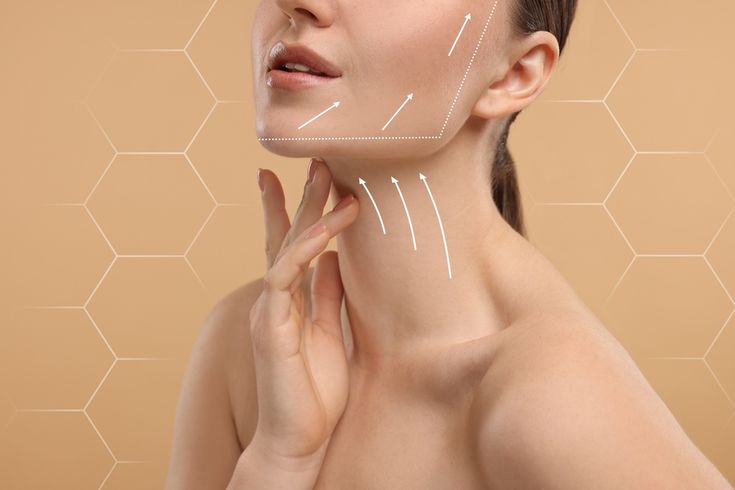
A well-defined jawline can contribute to facial balance, profile, and overall facial contour. However, jawline appearance varies naturally based on genetics, bone structure, muscle development, skin elasticity, and the distribution of facial fat. For individuals who want to improve jawline definition, cosmetic surgery and other aesthetic procedures can offer different approaches depending on their anatomy and goals. Understanding defining the jawline with cosmetic surgery involves looking at both the underlying facial structure and the soft tissues that surround it.
What Determines Jawline Definition?
The appearance of the jawline is influenced by several anatomical factors. The mandible, or lower jawbone, provides the basic framework, while muscles, fat, skin, and connective tissues contribute to its visible contour.
A naturally prominent jawbone may create a sharper lower-face outline, while a smaller or less projected jaw can produce a softer profile. Excess tissue beneath the chin or along the lower face can also make the jawline appear less distinct.
Age-related changes may further affect definition. Reduced skin elasticity and changes in facial fat distribution can lead to looseness around the jaw and neck.
Chin and Jawline Proportion
The chin is closely connected to the appearance of the jawline. Chin projection, width, and position can influence the balance between the lower face, lips, nose, and neck.
For some individuals, improving chin projection may create a more balanced facial profile. Chin augmentation using an implant or other surgical techniques can alter the appearance of the chin while supporting overall lower-face proportions.
In other situations, chin surgery may involve reshaping the patient’s own bone. The appropriate technique depends on the underlying anatomy and the desired structural change.
Jawline Contouring Surgery
Jawline contouring surgery focuses on changing the shape or proportions of the lower jaw. Depending on the individual’s anatomy, procedures may involve reducing or reshaping specific areas of the jawbone.
Bone contouring can sometimes create a narrower, smoother, or more defined lower-face appearance. However, the amount and location of reshaping must be carefully planned because the jaw contains important nerves, blood vessels, muscles, and other structures.
A detailed facial assessment is therefore essential before considering surgical jawline contouring.
Neck and Submental Contouring
The area beneath the chin can have a significant effect on jawline visibility. Excess fat or loose skin may create a less distinct transition between the chin, jaw, and neck.
Submental liposuction can remove localized fat beneath the chin in appropriately selected individuals. By reducing excess fat, the natural contours of the jaw may become more visible.
When significant skin laxity is also present, a neck lift or another skin-tightening procedure may be considered. The appropriate approach depends on skin elasticity, tissue volume, and the degree of laxity.
Facial Implants
Facial implants can be used to enhance structural projection in areas such as the chin or jaw. Chin implants, for example, can increase forward projection and alter the proportions of the lower face.
Jaw implants may provide additional width or definition along selected portions of the jawline. Implant selection and positioning require careful planning because facial anatomy differs significantly between individuals.
The goal is generally to create a proportionate enhancement rather than an appearance that looks disconnected from the rest of the face.
The Role of Facial Fat
Facial fat can influence the visibility of the jawline. Excess fat around the cheeks, lower face, or beneath the chin can soften the transition between facial structures.
In selected cases, fat removal procedures can help reveal existing contours. However, removing too much facial fat may produce an overly hollow appearance, particularly as the face naturally loses volume with age.
For this reason, facial contouring should consider both current appearance and long-term changes.
Skin Elasticity and Jawline Definition
Skin quality is another important factor when defining the jawline with cosmetic surgery. Individuals with good skin elasticity may experience better adaptation after procedures that reduce underlying fat.
When skin is significantly loose, removing fat alone may not provide the desired contour. A surgical lift may be considered to reposition tissues and remove excess skin.
A consultation can help determine whether the primary concern involves bone structure, fat distribution, skin laxity, or a combination of these factors.
Combining Procedures for Facial Balance
Jawline definition is not always achieved by treating the jaw alone. The relationship between the chin, cheeks, neck, lips, and nose can influence overall facial harmony.
For example, an individual with limited chin projection may benefit from a treatment that addresses the chin rather than simply reducing tissue along the jaw. Similarly, someone with excess submental fat may require a different approach from someone whose primary concern is skeletal structure.
Combining procedures may be appropriate in selected cases, but treatment should be based on individual anatomy and clearly defined goals.
Personalized Treatment Planning
There is no single jawline shape that is appropriate for every face. Facial width, height, bone structure, skin characteristics, age, and individual preferences all influence treatment planning.
During consultation, a cosmetic surgeon may evaluate facial proportions from the front and side, examine the jaw and chin, assess soft tissue, and discuss expectations. Imaging may sometimes be used to support planning and communication.
Patients should also understand potential risks, recovery requirements, scarring, and limitations before undergoing surgery.
Dr. Ahmad Houmsie is a highly skilled plastic and aesthetic surgeon in Dubai, with extensive clinical training and international credentials. He offers advanced cosmetic procedures for the face and body — including rhinoplasty, liposuction, breast surgery, tummy tuck, facelifts, and more — using state‑of‑the‑art techniques tailored to each patient. For anyone seeking expert guidance and transformative results, booking a consultation directly with Dr. Ahmad Houmsie ensures personalized care and professional excellence.